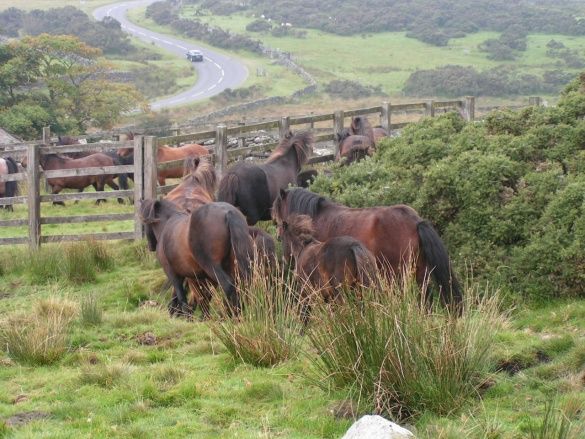

The Dartmoor Pony Society Moorland Scheme
In 1987 at the request of Mr. John Pugsley (then land steward at the Duchy of Cornwall), a meeting was held with representatives of the Dartmoor Pony Society. Present at the first meeting were Mrs. P. Campbell (Chair of the DPS), Mrs. P. Robinson (DPS), Mr. J. Coaker (Tenant, Pony Keeper and DPS Member), Mr. J. Jordan (Tenant and Pony Keeper), Mr. I. Mercer (Dartmoor National Park) and Ms. S. Eberle (Duchy of Cornwall Secretary). John Pugsley opened that meeting by outlining its purpose which was to work towards the increased presence of Dartmoor ponies on the Moor. At that stage, the committee agreed that a small breeding herd should be set up, that the Society’s supplementary register (SR) would need to be re-opened and SR mares would be used but the stallions would be registered. Mr. Coaker agreed to use his stallion and, in the first year, fifteen to twenty mares would be the maximum put to the stallion. Amongst other rules, was the decision to allow other Dartmoor Pony Farmers to put some of their SR mares forward to the scheme, the herd would be accommodated on Mr. Coaker’s Newtake with work and financial help being provided by the Duchy of Cornwall/Dartmoor National Park to provide appropriate fencing etc. Further meetings of this group occurred with management decisions all agreed and the initial nominee inspectors appointed were Mr. John Coaker, Mr. George Shillibeer and Mrs. Pat Robinson with Mr. John Jordan as a reserve.
On the 15th March 1988, Mr. John Puglsey explained that the Duchy wished the project to be fronted by the Dartmoor Pony Society rather than the Duchy, however he reiterated the Duchy’s support which was guaranteed for a five-year period. In fact, that support has continued ever since, for which the Dartmoor Pony Society are very grateful to the Duchy of Cornwall.
On the 17th October 1988, the committee reported on the first year of the Dartmoor Pony Society Moorland Scheme. This report highlighted the success of the first Newtake, which ran through the Spring and Summer of 1988 on land tenanted by Mr. John Coaker, who kindly granted access for the general public into the Newtake. The report states that co-operation between all concerned had been paramount in establishing the project. Those concerned at the time were committee members from the Duchy of Cornwall, the Dartmoor National Park Authority, the Dartmoor Pony Society and the Ministry of Agriculture, Fisheries and Food. The main achievement was considered turning the original idea into a Moorland Dartmoor Pony Improvement Scheme which had received good press and general approval. The committee also noted the passing of Mr. John Coaker, with great sadness and stated that his knowledge of the Dartmoor Pony would be greatly missed. It was considered very fortunate that the scheme was able to benefit from his membership of the committee during its formative year.
What began with only a small number of ponies has developed into a long-standing upgrading programme, administered by the Dartmoor Pony Society with financial and day to day management support from the Duchy of Cornwall. The current programme operates up to three Newtakes, continuing to showcase the presence of ‘true to type’ but not fully registered Dartmoor Ponies on Dartmoor in their native landscape.
Whilst the original ambitions of the scheme, to increase the number of registered Dartmoor Ponies roaming wild on Dartmoor, has not been able to be realised for practical reasons, such as the presence of stallions of different breeds and types, also roaming free on Dartmoor, the scheme has allowed an increase in the number of ‘true to type’ but not fully registered Dartmoor Ponies on the moor (mainly but not only in Newtakes); the capture of the genetics of ‘true to type’ but not fully registered Moorland Dartmoor Ponies to help maintain the genetic diversity of the registered breed of Dartmoor Ponies; and also allowed the value of the Dartmoor Farmers’ previously unregistered stock to increase.
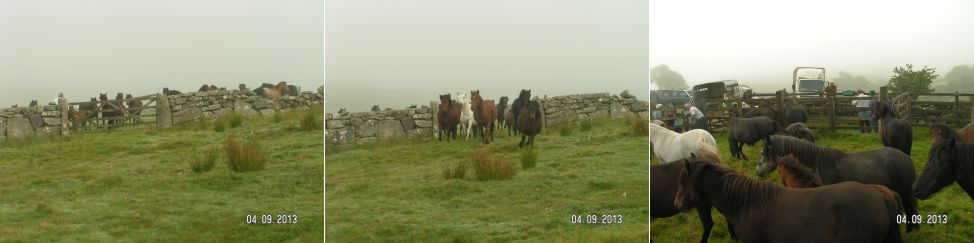
Purpose of the DPS Moorland Scheme and Supplementary Register
The DPS maintains a Supplementary Register, which remains open.
This register remains open for a limited period while the Rare Breeds Survival Trust (RBST) assesses whether the breed requires increased genetic diversity. Completion of all past registration records within the Grassroots database—a major undertaking—is essential for the RBST assessment.
The DPS Moorland Scheme places particular focus on preserving the Dartmoor Pony’s natural hardiness: its ability to survive extreme weather conditions and thrive on the open Moor. Keeping the Supplementary Register open enables the careful selection of ponies that demonstrate these vital genetic traits, while also meeting the DPS-approved Dartmoor phenotype.
Key points of the DPS Moorland Scheme:
- The Supplementary Register is restricted to females.
- Grading-up Dartmoor colt foals may be entered only into the Supplementary X Register (SRDX).
Eligibility for the DPS Moorland Scheme
Inspections for initial entry into the Supplementary Register (SRD status) can take place only on Dartmoor, and only within the DPS Moorland Scheme.
Only mares that meet the following criteria may enter the Scheme:
- Born on Dartmoor.
- Owned by a current Dartmoor Pony Society Full member.
- The owner must hold a valid holding number within the Dartmoor National Park.
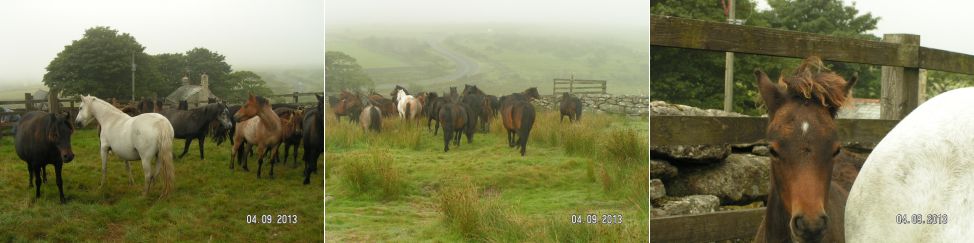
Inspection, Grading and the Newtake System
Unregistered mares inspected and approved as potential SRD mares become eligible for an SRD passport once accepted into a Newtake—an enclosed area on the Moor—where they run with a fully registered and licensed Dartmoor stallion for the summer.
All stallions used in the Newtakes must:
- Be fully registered and licensed.
- Be out of fully registered mares.
- Meet all DPS stallion licensing requirements.
Grading Process
The grading-up system progresses as follows:
- SRD (Supplementary Register Dartmoor)
- Assigned to an approved mare entering her first Newtake.
- SRD1
- Assigned to progeny of SRD mares after successful inspection as foals.
- SRD1 females should return to a Newtake when they are four years old to continue the upgrading process.
- SRD2
- Progeny of SRD1 mares, following successful inspection, enter as SRD2.
- SRD2 females should return to a Newtake when they are four years old to potentially produce fully registered offspring.
- Full Registration
- Female Progeny of SRD2 mares, after inspection and approval as foals, enter the Main Section of the Stud Book as fully registered Dartmoor Ponies.
Geldings registered as SRDX may be shown in Dartmoor pony classes but are not eligible for grants.
Supplementary Register colts may not be used to sire fully registered stock nor serve as stallions in the DPS Moorland Scheme.
Ownership and Movement of Supplementary Mares
- SRD and SRD1 mares may only be sold to breeders within Dartmoor National Park if the new owners wish the continue upgrading from them, ensuring that essential hardiness traits remain rooted in the traditional environment.
- If sold outside the National Park, their subsequent progeny cannot be registered in the DPS Main Stud Book.
- SRD2 mares may be sold outside the National Park and may continue to upgrade, provided they have produced at least one filly for their original breeder.
Owners must submit a passport application for every foal born in a Newtake by 30th November of its year of birth.
Management of Newtakes
In most years, up to three Newtakes are run, each with a fully registered stallion and up to fifteen mares.